October 8, 2026
Hurricane Season Tree Checklist for Coastal Bend Homeowners
By M&S Tree Service · Portland, TX
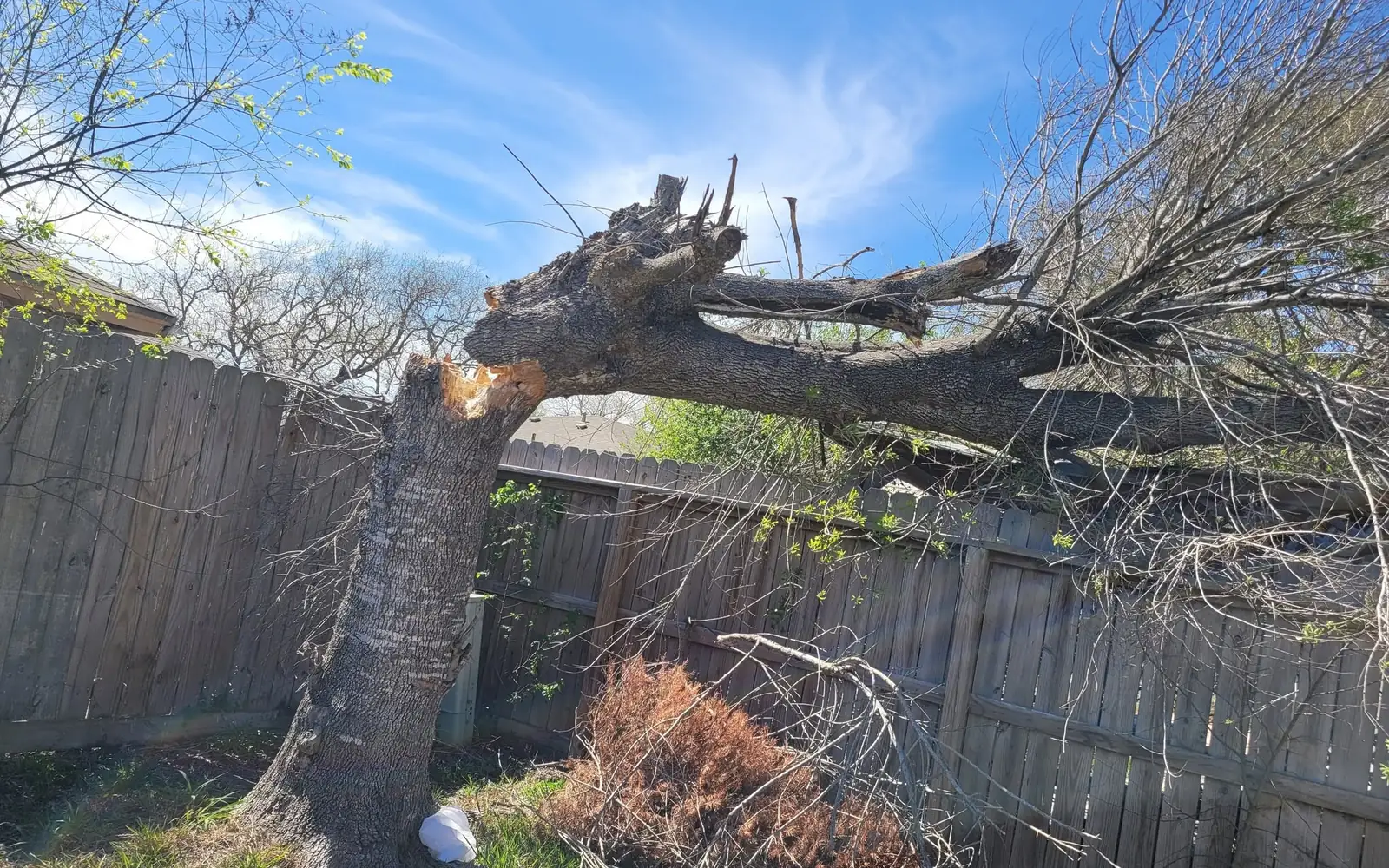
Atlantic hurricane season runs from June 1 through November 30. On the Coastal Bend, the trees in your yard are one of the biggest risks to your house and your cars when a storm comes through. A half hour walking the yard before the season can save a lot of trouble.
Walk the yard and look for these
- Dead limbs, or limbs with no leaves when the rest of the tree is green.
- Limbs touching or hanging over the roof.
- Cracks or splits in the trunk, or where big limbs meet the trunk.
- Trees that have started leaning, especially toward the house.
- Soil heaving or cracking at the base of a leaning tree.
- Mushrooms or soft, hollow spots at the base of the trunk.
- Palms with a skirt of dead brown fronds or heavy seed pods.
Any one of these is worth a closer look. Two or more on the same tree, especially one near the house, should be looked at before a storm is in the forecast.
Palms: clean them up, but don't overdo it
Dead fronds and seed pods become flying debris in high wind, so it's worth taking them off before the season. Leave the green fronds alone. A palm trimmed down to a few fronds at the top is weaker, not stronger, because the palm depends on those green fronds for food.
Don't wait for the forecast
When a storm is a few days out, every tree service on the coast gets busy at the same time. Getting risky trees handled early in the season means you're not competing for a crew the week a storm is coming.
If a tree comes down
- Get everyone away from the damaged part of the house.
- Stay away from downed power lines and call the electric company.
- Take photos for your insurance company if you can do it safely.
- Call a tree service to get the weight off the house before you start cleanup.
M&S Tree Service answers the phone 24 hours a day, 7 days a week: (361) 548-4857. Before a storm, trees that could land on a house get priority.
Sources: NOAA National Hurricane Center